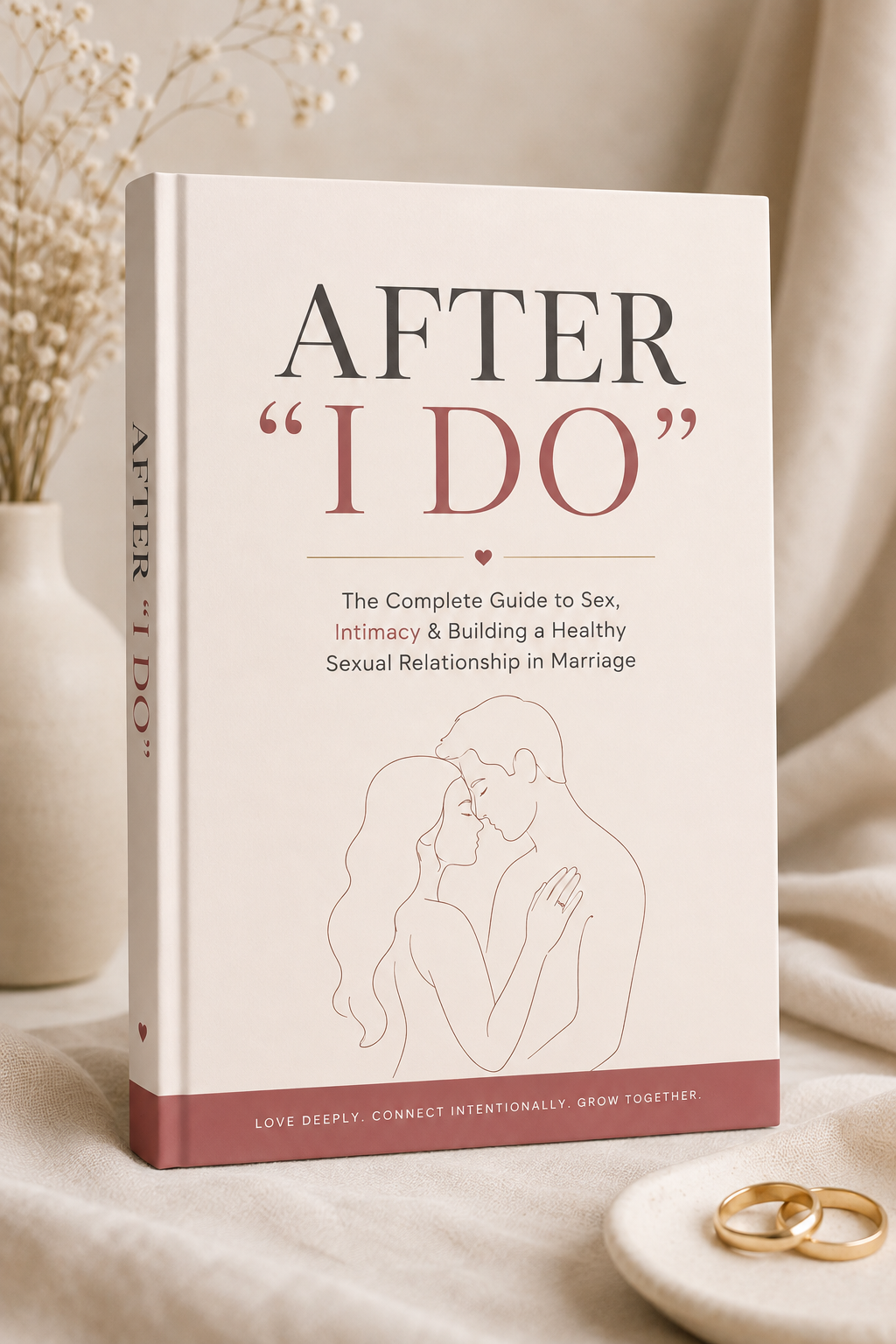
And for couples who waited until marriage, the silence can be even more noticeable.
You can spend months planning the wedding. You discuss the venue. The guest list. The clothes. The food. The honeymoon. Where you’ll live. How you’ll combine your finances.
You talk about almost everything.
Except the thing that many couples suddenly have to figure out when the wedding is over.
What happens when we’re finally alone?
It sounds like something you’ll just figure out.
And maybe you will.
But imagine this.
You’ve just gotten married. You’re exhausted from the wedding. You’re excited. You’re nervous. Your spouse is nervous too.
Neither of you really knows what the other person expects. Neither wants to say the wrong thing.
So instead of talking… you both assume.
“They’ll probably be comfortable with this.”
“They’ll know what I want.”
“We’ll just figure it out.”
And that’s where something interesting happens.
You can love someone deeply… and still completely misunderstand them.
Because your spouse cannot read your mind. And you cannot read theirs.
Love does not remove the need for language. In fact, love gives you a reason to speak more carefully—to ask instead of assuming, to listen without rushing, and to make room for an answer that may be different from your own.
Your first night doesn’t have to be perfect.
This is one of the biggest things newlywed couples need to understand.
Your first sexual experience may not look like the version you’ve imagined. It might be beautiful. It might be awkward. It might be exciting. It might be completely different from what you expected.
And none of those things automatically means something is wrong.
You’re not performing for an audience. You’re not taking an exam. You’re two people beginning to learn each other in a very vulnerable way.
There is no prize for moving faster than either person is ready for. There is no shame in pausing, laughing, asking a question, changing your mind, or deciding that closeness tonight looks different from what you pictured.
That’s why the better question isn’t:
“Did we do it right?”
It’s:
“Did we feel comfortable enough to communicate?”
That question is much more important.
Because the real issue isn’t always sex.
Sometimes it’s communication.
One person is nervous but doesn’t say anything. The other person doesn’t realize it. One person expects intimacy to happen frequently. The other needs more time.
One person thinks something is completely normal. The other has never even considered it.
Neither person is necessarily wrong. They simply have different expectations.
Those expectations may come from family messages, faith, past experiences, things you heard from friends, or ideas absorbed without ever examining them. Even two people who share the same values can attach very different meanings to affection, initiation, rejection, frequency, and desire.
And if nobody talks about those differences… they don’t magically disappear.
They become assumptions. Then misunderstandings. Then frustration. And eventually, sometimes, resentment.
A conversation cannot guarantee that every difference will disappear. But it can stop a difference from becoming a private story you tell yourself about your spouse: They don’t want me. They don’t care. I’m disappointing them. Something must be wrong with us.
Honest words give both people a chance to understand what is actually happening.
Some of the most important words in a marriage sound very simple.
“I’m nervous.”
“Can we slow down?”
“I’m comfortable with this.”
“I’m not comfortable with that.”
“Can we talk about it?”
These aren’t signs of a bad marriage. They’re signs that two people are actually learning how to communicate.
And that matters because intimacy isn’t only physical.
It’s trust. It’s vulnerability. It’s feeling safe enough to tell your spouse the truth.
It’s knowing that you can say something uncomfortable without being mocked, pressured, or dismissed. It is also knowing how to hear your spouse’s honesty without turning it into a verdict on your worth.
That kind of safety is not built by never having an awkward moment. It is built by what you do inside the awkward moment: whether you stay kind, whether you stay curious, and whether you protect the dignity of the person you married.
And then life happens.
This is the part nobody can fully prepare you for.
Your first night is only one night. Your marriage may last decades.
Eventually there will be stressful seasons. Busy seasons. Pregnancy. Children. Fatigue. Changes in your body. Changes in desire. Health challenges.
There may be times when one person wants intimacy and the other doesn’t. And moments when you don’t even know how to explain what’s wrong.
The habits you build early matter here. If you learn that “not tonight” can be heard with tenderness, honesty becomes easier. If affection is not treated as a transaction, closeness has room to breathe. If questions are welcome, confusion does not have to become conflict.
The question isn’t whether these things can happen. The question is:
Will you know how to talk about them when they do?
Because a healthy intimate relationship isn’t something you establish once on your wedding night.
It’s something you keep building.